Becker muscular dystrophy — a multisystemic, progressive disease with irreversible consequences
Consider the following myths and facts about Becker:
| Myth | Fact |
|---|---|
| Becker is a mild form of muscular dystrophy. | Becker is often perceived as a mild dystrophinopathy—but there is nothing mild about the rate of progression or its impact on people living with the disease.3,5-7
Becker is a chronic, progressive, and multisystem disease, which can result in irreversible loss of muscle function, and may lead to loss of ambulation. The disease imposes significant physical, emotional, financial, and social impacts on the individual and their caregivers.3,4,7,8 |
| Disease management measures should be taken only after patients with Becker begin exhibiting functional muscle decline. | Beyond skeletal muscle, Becker also compromises cardiac function—a major contributor to morbidity and mortality in people with Becker.3,4,9
There are currently no approved drug treatments specific to Becker. Disease management consists of symptom management and physiotherapy. When utilized early in the course of disease, it can help support long-term muscle health. There are also approved cardiac medicines to potentially help manage Becker-related cardiac complications, which may improve patient prognosis.4,5,9 |
| Individuals who have Becker do not have a long life expectancy. | People with Becker may live long, full lives, often remaining mobile well into adulthood. However, cardiac complications, if present, can significantly impact morbidity and mortality.4,9 |
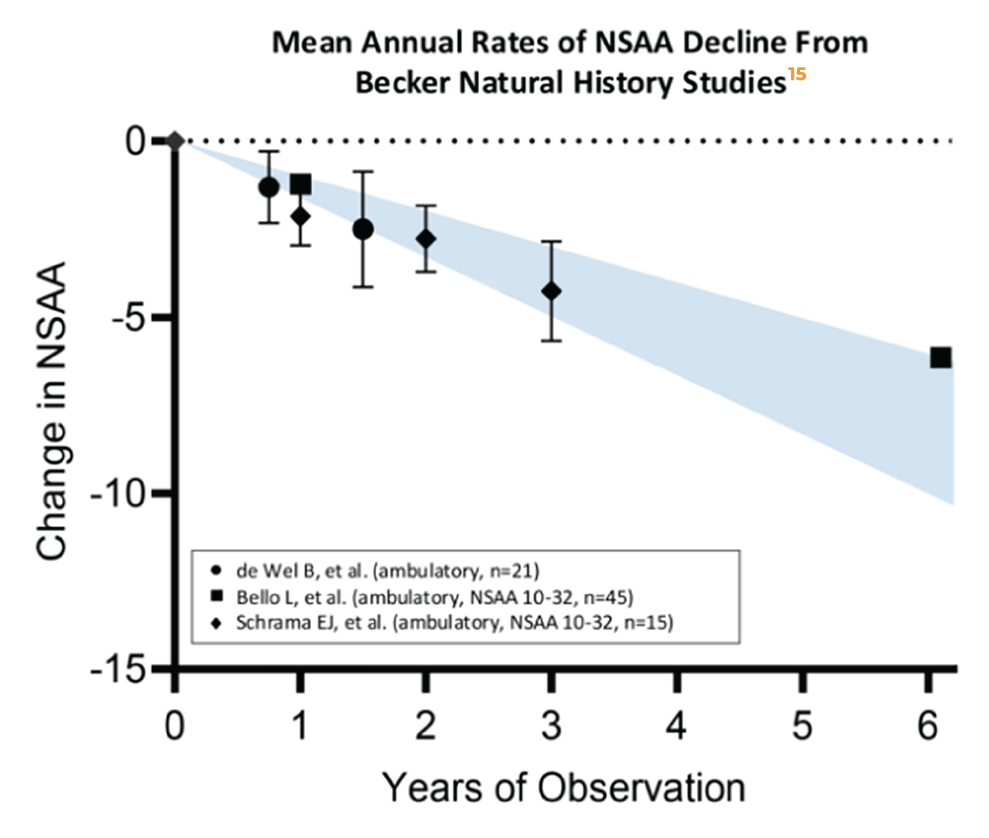
| Progression in Becker is slow and unpredictable. | Emerging data from Becker natural history studies highlight a clearer, more consistent rate of decline. Once functional loss appears, progression is ongoing—averaging a 1.0 to 1.7 point annual decline in North Star Ambulatory Assessment (NSAA) scores.6,10-15 |
| People living with Becker should avoid physical activity. | Physical activity can be an important part of disease management in Becker. Maintaining an active lifestyle may help minimize the risk of joint contractures and muscle fatigue, and optimize muscle functions critical for performing everyday activities—especially when plans are individualized and appropriately paced with clinical guidance from a multidisciplinary care team.1-5 |
| In the earlier stages of Becker, when patients may not recognize the day-to-day impact of their disease or their compensatory behaviors, the only option is to wait and see how the disease progresses in each individual patient. | The consistent downward trajectory of Becker necessitates a more urgent care approach. Timely recognition, consistent monitoring, and implementation of a proactive care plan can support your patients’ cardiac health and help maintain strength and range of motion in remaining skeletal muscles.3,4,6,7,14 |
A more complete picture of Becker is being revealed
New data reveal the disease trajectory is clear. In patients experiencing decline, consistent and irreversible loss of function is happening now and requires immediate action.4-7,14
Natural History of Becker Muscular Dystrophy
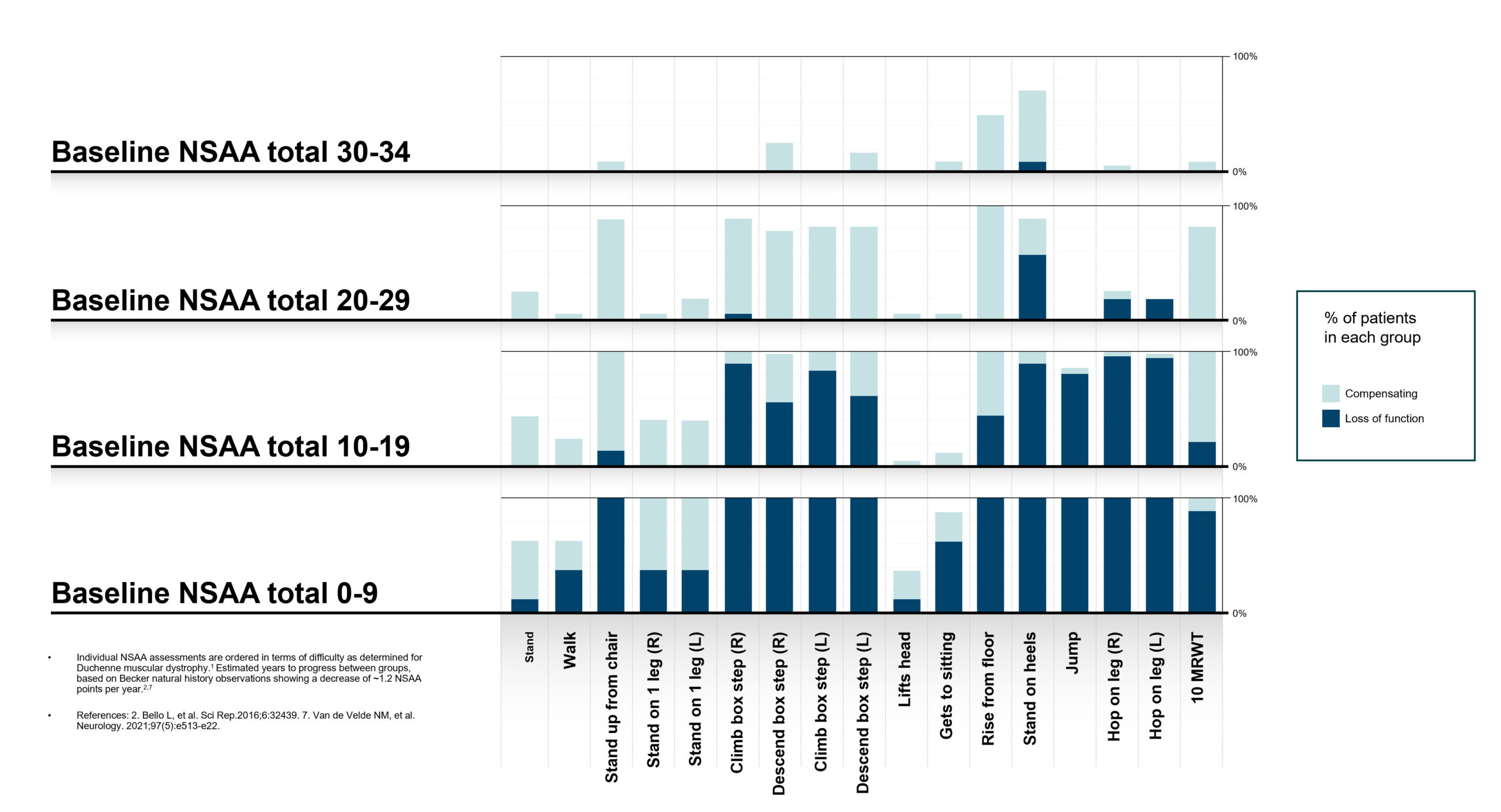
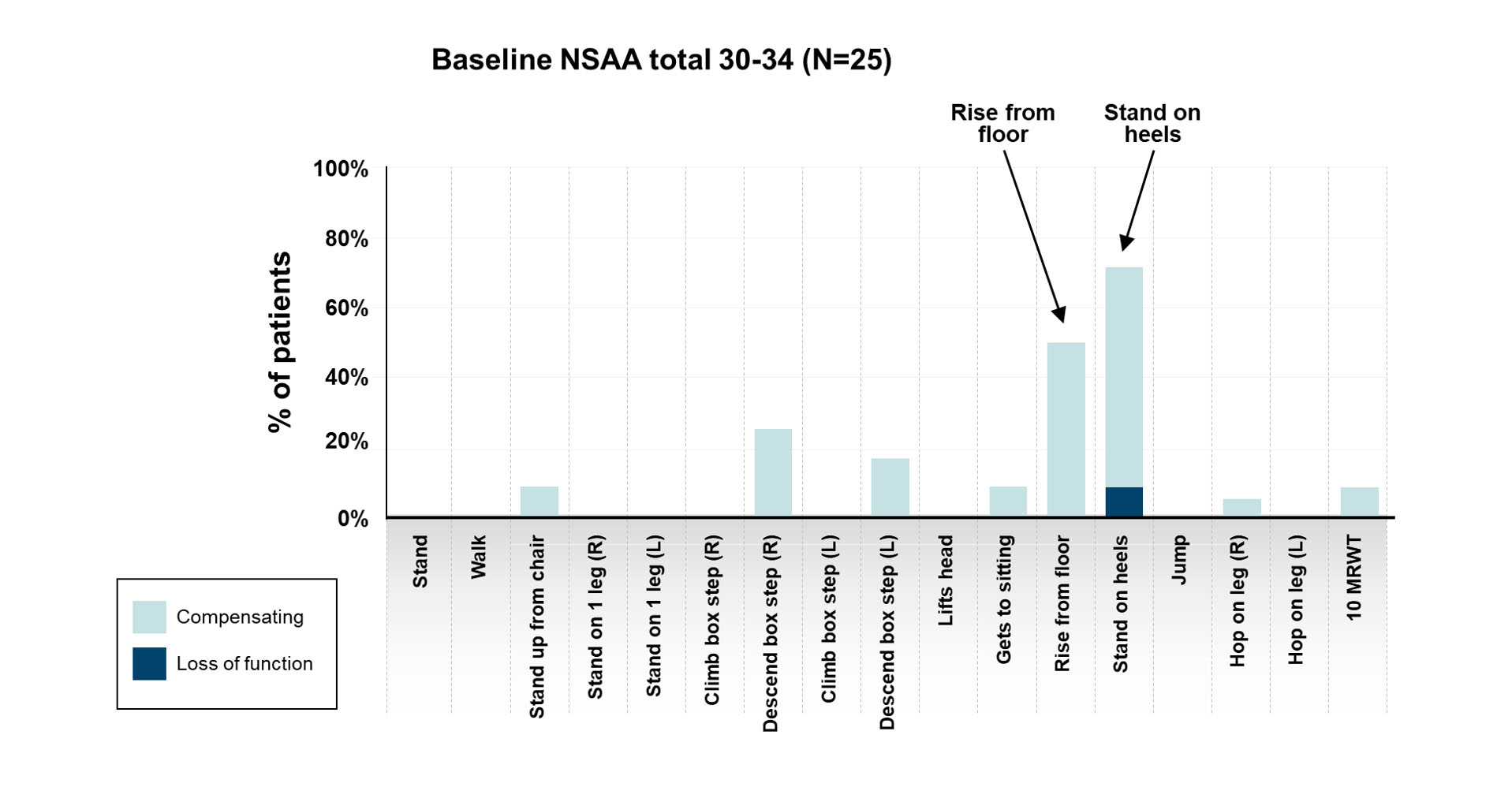
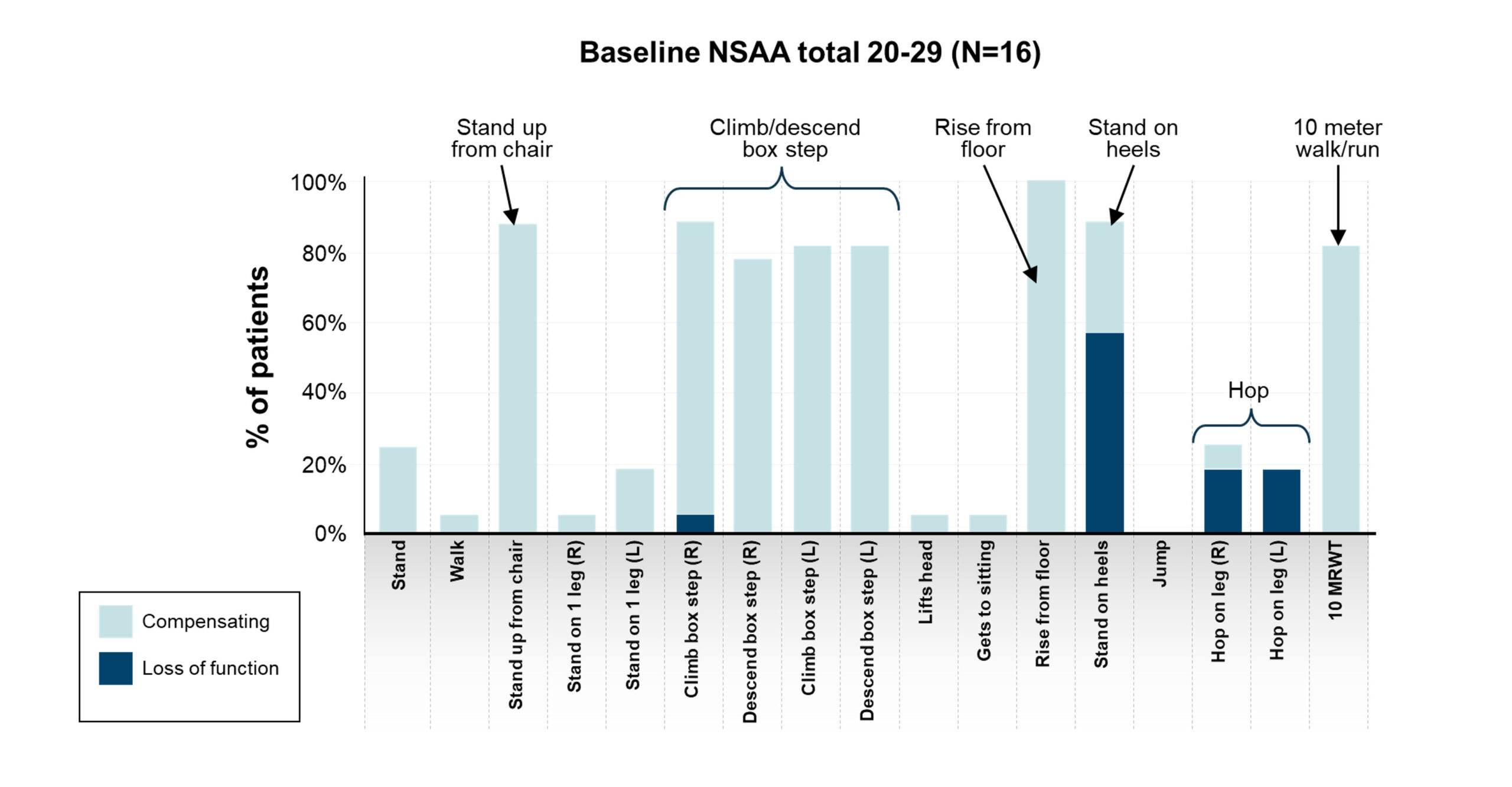
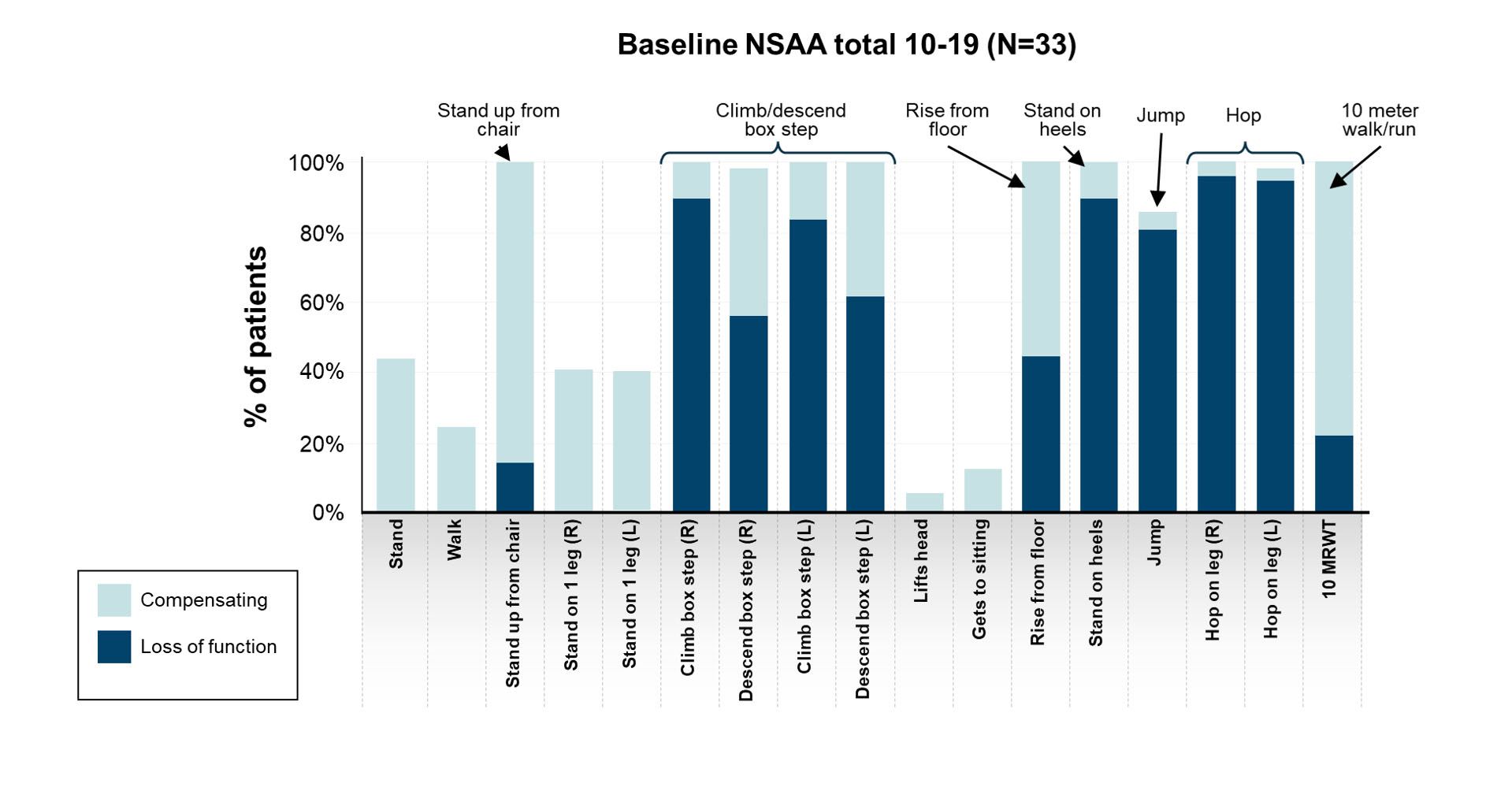
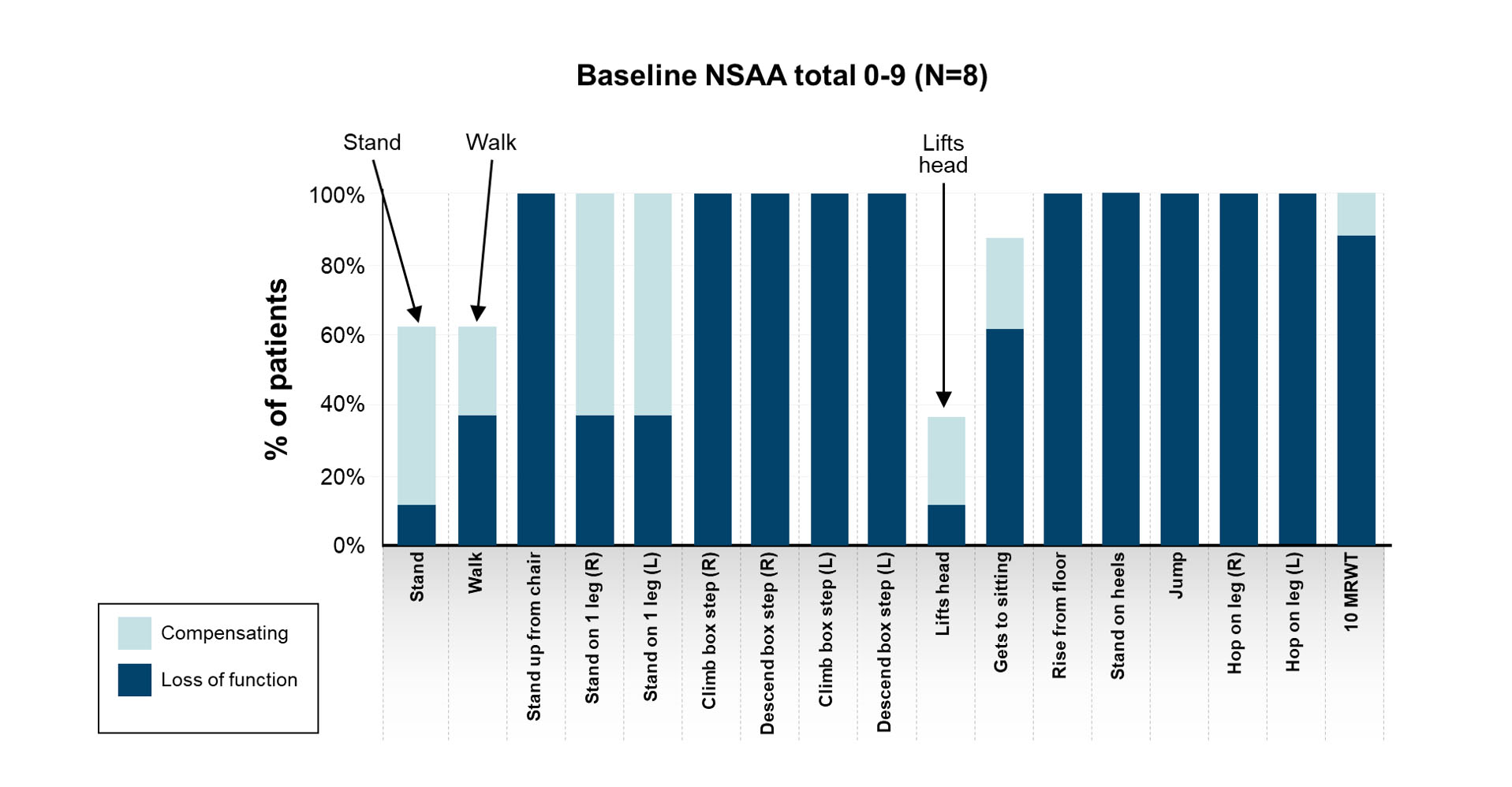
- The North Star Ambulatory Assessment (NSAA) measures an individual’s ability to perform 17 assessments which test the speed and functionality of their motor skills.10
- Recent natural history studies of Becker reveal that, in patients who have experienced some functional decline as measured by an NSAA score below 32, disease progression follows a consistent, steady trajectory with an average 1.0 to 1.7 point annual decline in NSAA scores. This decline equates to, on average, compensation or loss of one to two physical functions per year in people experiencing progression, which are significant changes that negatively impact daily life.6,8,10-15
- For example, over a 2-year period, for individuals living with Becker muscular dystrophy, this could mean:
-
- From using a toilet independently to having to ask for help to get up from using a toilet.
-
- From being able to navigate stairs or step over a sidewalk curb on one’s own, to requiring assistance from another person or from a mobility device.
-
- From being able to get up from a fall to requiring someone else’s help to get back up.

Recognizing that the unrelenting progression of Becker toward further functional impairment is driven by ongoing muscle injury supports the need for a more proactive approach to care.1,2,7
Bring unseen injury to light
Ongoing injury to skeletal or cardiac muscle can accumulate before symptoms are evident.1-3
In Becker, reduced or abnormal dystrophin weakens the structural support of muscle fibers, making them more vulnerable to contraction-induced muscle injury.1,2
Over time, this repeated injury overwhelms the muscle’s ability to repair itself, leading to fatty replacement, fibrosis, and scarring.1,2,4
This steady, repetitive process is the central mechanism of disease progression in Becker muscular dystrophy and leads to progressive, irreversible muscle damage and loss of function.1,2,7,17
In terms of disease management, a balanced approach to physical activity remains appropriate for many patients with Becker when developed collaboratively and guided by the clinical judgment of a multidisciplinary care team.1,2,4,5

Living with Becker muscular dystrophy means Jess takes his time entering the subway. He’s saving his muscles for the stairs that matter—like those at his comedy club.
Reveal the reality behind decline
The downward trajectory of Becker necessitates a more urgent care approach.4,6,14
In the earlier stages of Becker, some patients may dismiss early symptoms as “growing pains” or find effective compensation strategies that delay them from seeking medical attention. But over time, repeated contraction-induced muscle injury results in irreversible muscle damage, which may ultimately lead to pervasive, functional decline.1,7,10,17,18
While the onset and presentation of symptoms differ among individuals, once functional decline begins, the process often follows a steady, irreversible path toward increasing disability measurable by NSAA.6,10-12,14
- This steady decline in NSAA scores may manifest as patients having increasing difficulty with mobility tasks or compensatory adaptations year over year. It may begin with difficulty climbing stairs, getting up from a chair, or stepping over curbs, and may reportedly progress to the inability to pick up a child, increased risk of falling, or a complete loss of ambulation.5,6,10-12,14,19
Becker muscular dystrophy also impacts other parts of the body, including the cardiac, respiratory, gastrointestinal, and endocrine systems.4,9,20
Progressive Multisystemic Symptoms
Decline is not a single moment. It’s an ongoing process. Take the opportunity to act today before additional functional loss sets in. Timely recognition, consistent monitoring, and implementation of a proactive care plan can help optimize strength and range of motion in remaining skeletal muscles and support your patients’ cardiac health.4,6
Musculoskeletal
Ongoing contraction-induced muscle injuries in Becker lead to irreversible loss of muscle and function.7

- Skeletal muscle weakness, muscle cramps, and pain are key presenting symptoms in Becker. Symptoms become apparent at the mean age of 11, with 90% of individuals with Becker experiencing symptoms by age 20.4,18
- Progressive, symmetric muscle weakness usually starts affecting the proximal limbs before distal limbs, and lower limbs before the upper limbs, often with calf hypertrophy and an increase in circulating creatine kinase levels, indicative of skeletal muscle injury.3,4
- In individuals living with Becker, lower limbs are initially affected, causing fatigue while walking, followed by weakness standing up or waddling gait. Upper limb weakness may also be present and worsens as the disease progresses.4,21
- According to an analysis of 162 patients with Becker, ~1 out of 5 patients required full-time wheelchair use by the age of 40.22
Over time, as muscle is replaced by fat and fibrosis, individuals living with Becker have difficulty standing up, walking (waddling gait), running, and jumping, and may have frequent falls.4,10,21
Cardiac
Over 60% of people with Becker experience cardiac involvement, such as dilated cardiomyopathy or impaired left ventricular systolic function.4,9,23

- In Becker muscular dystrophy, deterioration of cardiac muscles is a result of contraction-induced injuries in the absence of fully functional dystrophin.1,9,24
- While cardiomyopathy usually presents in the 3rd decade of life, typically years after the appearance of musculoskeletal symptoms, the risk of cardiomyopathy is independent of the skeletal muscle phenotype. In rare instances, individuals with Becker muscular dystrophy can have minimal skeletal muscle weakness but advanced cardiac disease. Some patients can develop advanced cardiac disease as early as their teens or 20s.7,9,23
- If left untreated, cardiomyopathy can lead to heart failure, even requiring heart transplantation. Heart failure is the most common cause of premature death in individuals living with Becker.3,4,9,23
As soon as the diagnosis of Becker muscular dystrophy is established, a comprehensive cardiac examination is recommended. Cardiac involvement in Becker is progressive and therapy is available. Cardiac examinations need to be regularly repeated.4
Respiratory Complications
Weakness of the diaphragm and other respiratory muscles can result in a decline in respiratory function in individuals living with Becker muscular dystrophy, typically at more advanced stages of the disease and in those who have lost ambulation.4,22

In those with advanced Becker muscular dystrophy, ventilatory support may be required.4
Other Symptoms

- Autism spectrum disorders, attention-deficit hyperactivity disorder, depression, anxiety disorders, and obsessive-compulsive disorder may also occur in individuals living with Becker.4
- Individuals living with Becker may also present with behavioral issues, panic attacks, and language problems.26
- The prevalence of intellectual disorders is 4 times higher in children and adolescents with Becker than in the general population of the same age.4
- Becker muscular dystrophy can lead to gastric distention, gastroparesis, and secondary conditions, including constipation, urinary incontinence, and pain.4
Among the most frequently reported secondary conditions (ie, those not related to the skeletal, heart, and respiratory systems), cognitive and neuropsychological symptoms are observed in approximately 30% of individuals living with Becker muscular dystrophy.5